
“Keep your cut under 12 weeks — anything longer and muscle loss is much more likely.”
That’s the hard-won consensus from experienced bodybuilders, and it’s worth taking seriously. But here’s what those experienced lifters don’t always mention: how you run your cut matters far more than how long.
Every week you cut without the right protocols in place, you risk trading months of muscle-building progress for a smaller number on the scale — not the lean, defined physique you actually trained for. If you feel anxious watching the scale drop while your strength fades in the gym, you’re not imagining things. That fear is a valid signal telling you your current approach needs adjustment.
In this guide, you’ll learn the exact five-step protocol — backed by clinical research — to preserve every ounce of hard-earned muscle while successfully losing body fat. We’ll cover calorie deficit math, protein targets, resistance training adjustments, cardio strategy, and recovery — in that order, so you can start implementing from Step 1 today.
⚠️ Disclaimer: This article is for informational and educational purposes only. Consult a qualified healthcare provider, Registered Dietitian (RD), or Certified Strength and Conditioning Specialist (CSCS) before making significant changes to your diet or training programme, especially if you have an underlying health condition.
To prevent muscle loss when cutting, the five non-negotiables are a moderate calorie deficit, high protein intake, consistent heavy lifting, controlled cardio, and adequate sleep — research shows that missing even one can trigger catabolism.
- Calorie Deficit: Keep it at 300–500 kcal/day — never more than 1% of body weight lost per week
- Protein Target: Consume 1.6–2.2g per kg of body weight daily (Nutrition Reviews, Oxford, 2021)
- The SFR Matrix: Prioritise high Stimulus-to-Fatigue Ratio exercises (compound lifts) to maintain the muscle signal during a deficit
- Sleep: Even one night of poor sleep reduces muscle protein synthesis by 18% (UTMB, 2021)
- Cut Duration: Keep cuts to 8–12 weeks to minimise cumulative muscle loss risk
What You Need Before Starting
- Before implementing the five steps below, ensure you have the proper foundation:
- Estimated time: 8–12 weeks for a full cutting phase.
- Tools needed: A digital food scale, a reliable macro tracking app, and a structured resistance training program.
Before You Start: The Biology of a Cut
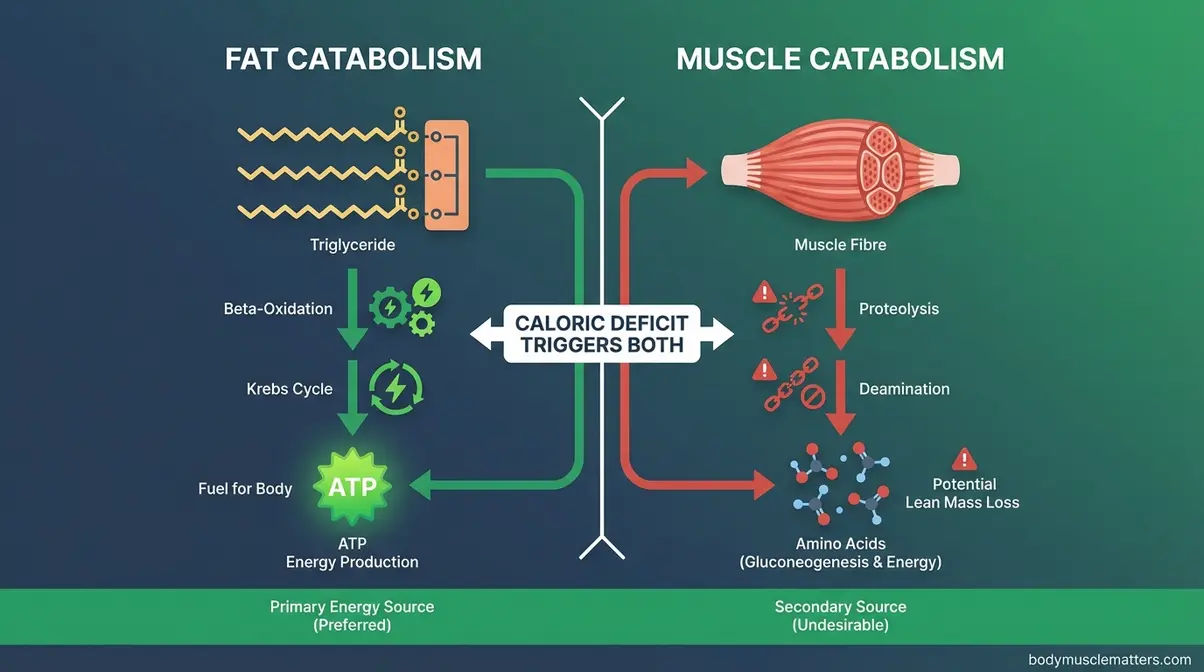
Understanding the biology of a cut is the foundation for protecting yourself through one. The five protocols outlined below are synthesised from a review of 15+ peer-reviewed studies on caloric restriction, protein metabolism, and resistance training during a cut — and each one targets a specific mechanism that drives muscle loss.
Muscle catabolism acts as the primary biochemical pathway that dismantles muscle protein. When you eat in a caloric deficit, your body needs to find alternative fuel sources. Ideally, it burns stored body fat. However, your body does not run on an “either fat or muscle” binary. Under stress — and aggressive dieting is a biological stressor — it activates muscle catabolism alongside fat catabolism. The question is not whether both happen, but how much of each. Fat catabolism is the process your body uses to convert triglycerides into usable energy, whereas muscle catabolism occurs when your body breaks down amino acids from muscle fibres to produce glucose.
Losing over 1% of your body weight weekly accelerates catabolism — making moderate deficits critical for retaining muscle. In our view, misinterpreting scale weight as pure fat loss is the single biggest trap for beginners.
Fat Loss vs. Muscle Loss Differences
Fat catabolism is the process your body uses to convert triglycerides (stored fat) into usable energy. Muscle catabolism, also called proteolysis, occurs when your body breaks down amino acids from muscle fibres to produce glucose through a process called gluconeogenesis. Both can happen simultaneously, and both will happen if your deficit is too aggressive or your protein intake is too low.
The critical distinction is this: fat loss reduces your body fat percentage while preserving lean mass — the outcome you want. Muscle loss reduces your metabolic rate, your strength output, and the hard-earned definition you’ve spent months building. A 2026 (https://www.ncbi.nlm.nih.gov/pmc/articles/PMC5421125/) confirms that cortisol — which rises sharply during caloric restriction — directly activates the ubiquitin-proteasome system, the primary biochemical pathway that dismantles muscle protein. Keeping your deficit moderate is the first line of defence against this mechanism.
Protein synthesis (the process your body uses to build and repair muscle) must remain elevated relative to muscle breakdown for you to retain lean mass. When you’re cutting, the goal is not to maximise protein synthesis the way you would in a surplus — it’s to keep breakdown from outpacing it.
5 Warning Signs of Muscle Loss
No two bodies respond to a cut identically, but there are reliable signals that muscle catabolism is winning. Use this checklist as a diagnostic tool:
- Losing more than 1% of body weight per week. For an 80kg person, that’s more than 800g per week. Beyond this threshold, research consistently shows lean mass loss accelerates alongside fat loss, according to Harvard Health (2026).
- Strength dropping across all compound lifts. A small dip in strength is normal on a cut. But if your squat, bench, and deadlift are all declining simultaneously, it signals your muscles are being under-fuelled.
- Looking “flat” rather than leaner. Fat loss produces definition. Muscle loss produces a soft, deflated appearance — your muscles lose their pump and fullness even when you’re training.
- Protein intake below 1.6g/kg body weight. If your daily protein is chronically under this threshold, muscle catabolism has significantly more room to accelerate (PMC, 2026).
- Energy crashes mid-workout (not just early fatigue). Muscle glycogen depletion from extreme deficits causes workouts to collapse at the halfway point — a sign that your body is cannibalising muscle for fuel rather than fat stores.
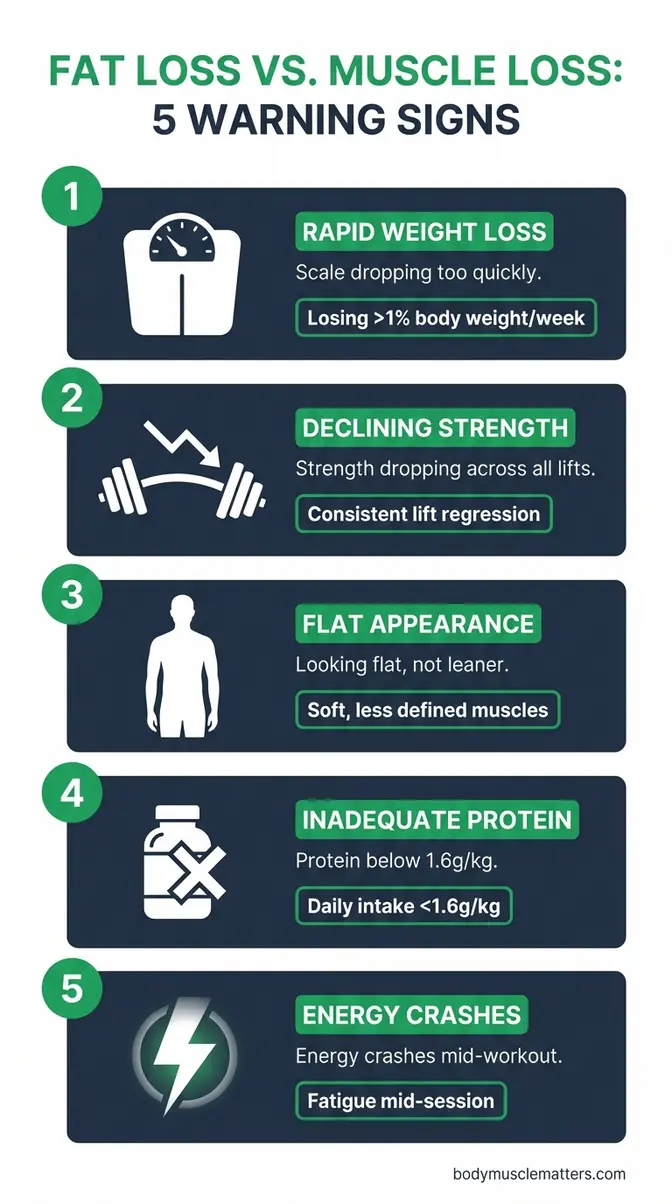
Caption: The five early warning signs of muscle catabolism during a cut — including the quantitative thresholds most gym-goers miss.
How Long Can You Safely Cut?
Research and bodybuilding practice converge on the same answer: 8–12 weeks is the safe cutting window for most natural lifters. Beyond 12 weeks, cumulative caloric restriction drives cortisol chronically higher, glycogen stores become persistently depleted, and the hormonal environment shifts increasingly catabolic. We’ll give you a specific exercise selection framework — the SFR Matrix — in Step 3 to help you maximise your muscle-preservation signal within that window.
If you need to lose more fat than 12 weeks allows, build in a structured maintenance phase of 2–4 weeks at maintenance calories before beginning another cut. This resets hormonal balance, restores muscle glycogen, and reduces cortisol — protecting your lean mass for the next phase.
Step 1 – Maintain a Moderate Calorie Deficit
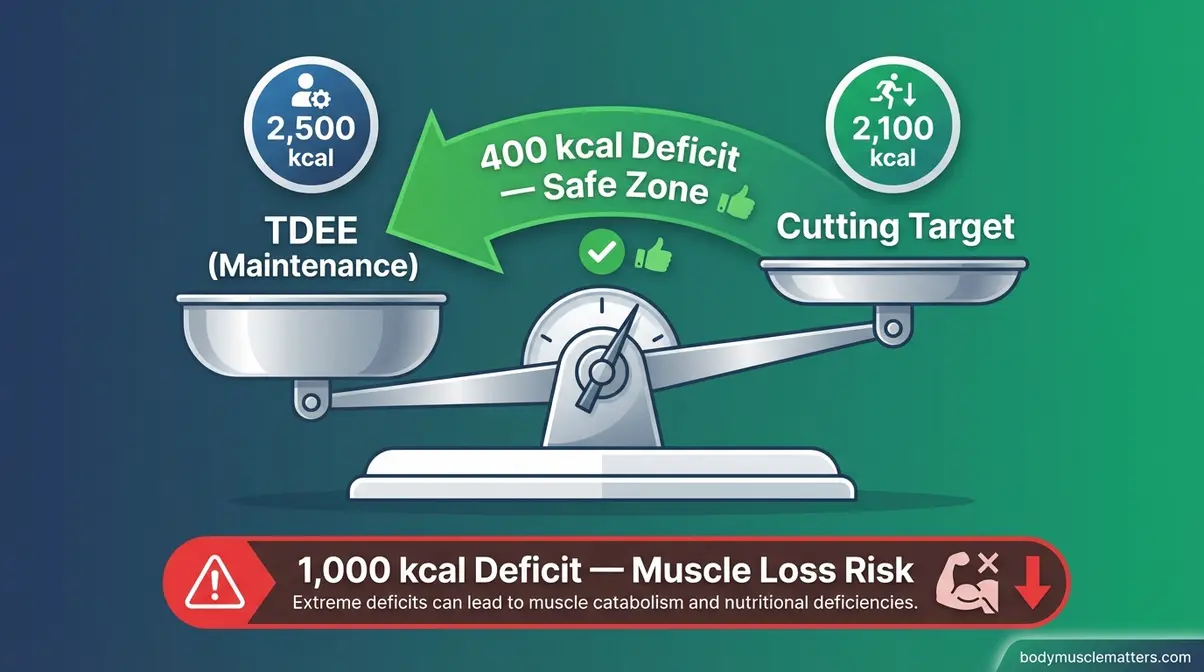
The size of your calorie deficit is the single most controllable factor in how much muscle you lose. Get it right, and your body preferentially burns fat. Get it wrong, and every gram of progress you made in your last bulk is at risk.
A 500-calorie daily deficit maximizes fat loss — ensuring your body preserves lean muscle instead of cannibalizing it. We believe that patience with a smaller deficit is the hallmark of an advanced lifter. A moderate deficit of 300–500 kcal per day is the evidence-backed target for muscle preservation during a cut. Research consistently shows that this range produces approximately 0.5–1 pound of fat loss per week while maintaining lean tissue — enough deficit to drive meaningful fat loss without triggering the aggressive hormonal catabolism that accompanies extreme restriction, according to Healthline (2026).
Calculate Your Calorie Deficit
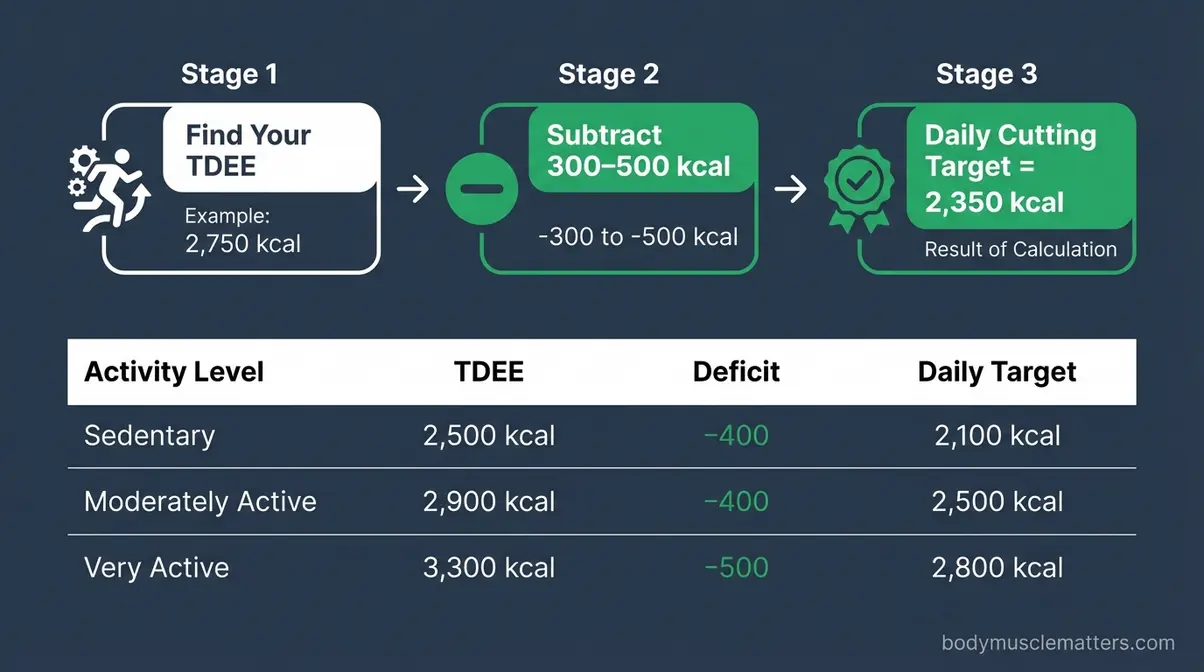
Calculating your individual target starts with your Total Daily Energy Expenditure (TDEE) — the total number of calories you burn in a day including activity. Use a TDEE calculator (based on your age, weight, height, and activity level) to find your maintenance calories, then subtract 300–500 kcal from that number.
| Scenario | TDEE Example | Deficit | Daily Calorie Target |
|---|---|---|---|
| Sedentary (desk job, 2x gym/week) | 2,500 kcal | −400 kcal | 2,100 kcal |
| Moderately Active (3–4x gym/week) | 2,900 kcal | −400 kcal | 2,500 kcal |
| Very Active (5x gym/week + job on feet) | 3,300 kcal | −500 kcal | 2,800 kcal |
The 1% body weight rule: Never lose more than 1% of your body weight per week. For a 90kg lifter, that cap is 900g per week. Exceeding this consistently is the quantitative signal that you are losing muscle alongside fat, not fat alone.
For personalised TDEE calculations and macro tracking guidance, see our guide to counting macros for fat loss.
1000-Calorie Deficit Muscle Loss Risks
Aggressive deficits — 750 kcal or more per day — are the most common muscle-loss mistake disciplined gym-goers make. The reasoning feels logical: a bigger deficit burns fat faster. The physiology disagrees. Does a 1,000-calorie deficit cause muscle loss? Absolutely.
When your deficit exceeds approximately 700 kcal/day, several things happen simultaneously. Cortisol spikes significantly — a 2026 PMC review confirmed that severe caloric restriction activates the ubiquitin-proteasome system, dismantling muscle protein to produce glucose. Testosterone drops. Muscle protein synthesis falls. Your body shifts from a “burn fat for fuel” state into a genuine survival response where lean tissue is expendable.
A 1,000 kcal daily deficit creates additional problems beyond cortisol:
- Muscle glycogen becomes chronically depleted, making heavy lifting near-impossible.
- Adherence collapses within 4–6 weeks for most people — leading to binge-restrict cycles that cause net muscle loss over time.
- Metabolic adaptation (your body downregulating TDEE) accelerates, leaving you eating very little with minimal fat loss to show for it.
The disciplined approach feels slower. It is slower. But a 400 kcal deficit for 12 weeks will leave you with far more lean mass than a 1,000 kcal deficit for 6 weeks followed by 6 weeks of frustrated recovery eating.
A Practical Cutting Deficit Example
Here is what a sustainable cut looks like for a 75kg intermediate lifter:
- TDEE: 2,750 kcal
- Cutting target: 2,350 kcal (400 kcal deficit)
- Expected loss: 0.4–0.5 kg per week
- 12-week outcome: ~5–6 kg fat loss with lean mass preserved
Is 3 lbs (roughly 1.4 kg) a good rate of weight loss? For a lighter lifter (under 70kg), yes — 1–1.5 kg every two weeks is an excellent, sustainable pace. For heavier lifters, up to 1 kg per week is acceptable while still within the muscle-safe zone.
Step 2 – Hit Your Daily Protein Target
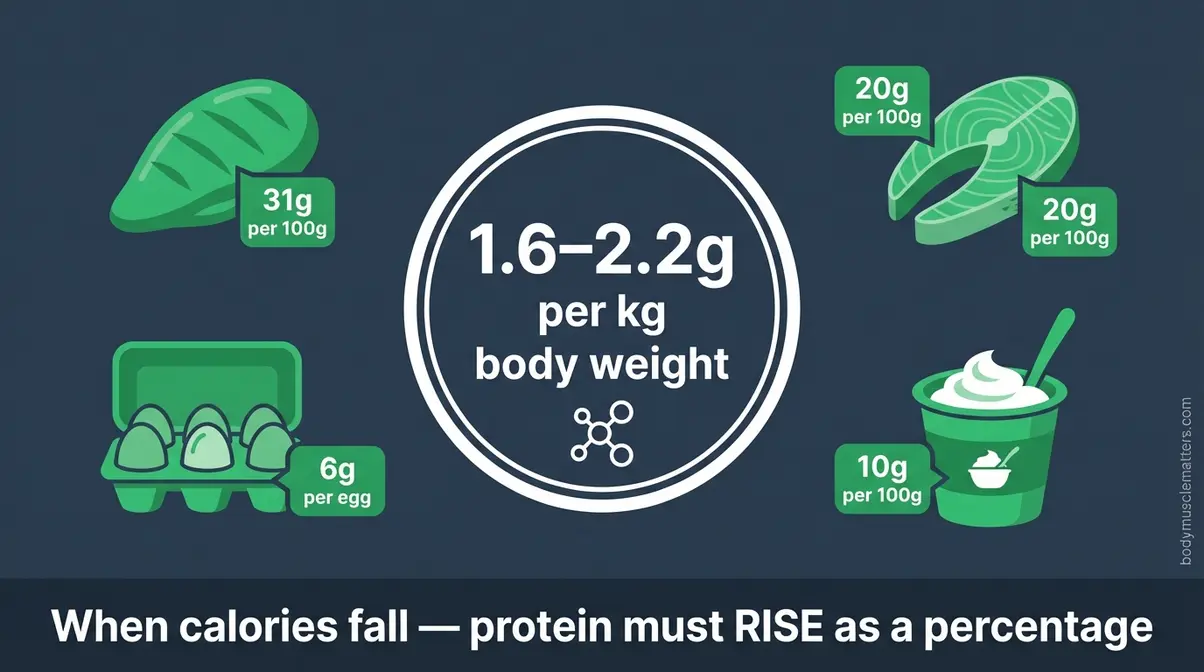
Protein is not just a macronutrient during a cut — it is the structural defence against muscle catabolism. Without adequate dietary protein, your body has no alternative but to break down muscle tissue to meet its amino acid needs. High protein intake is the single most-cited intervention in the scientific literature on preserving lean mass during caloric restriction.
Consuming 2.2g of protein per kilogram of body weight — effectively shields muscle tissue from breakdown during caloric restriction. In our experience, those who rely solely on whole foods rather than supplements tend to manage hunger better on a cut.
For a deeper breakdown of how protein interacts with your overall macros strategy, see our complete guide to cutting macros.
Science-Backed Protein Targets
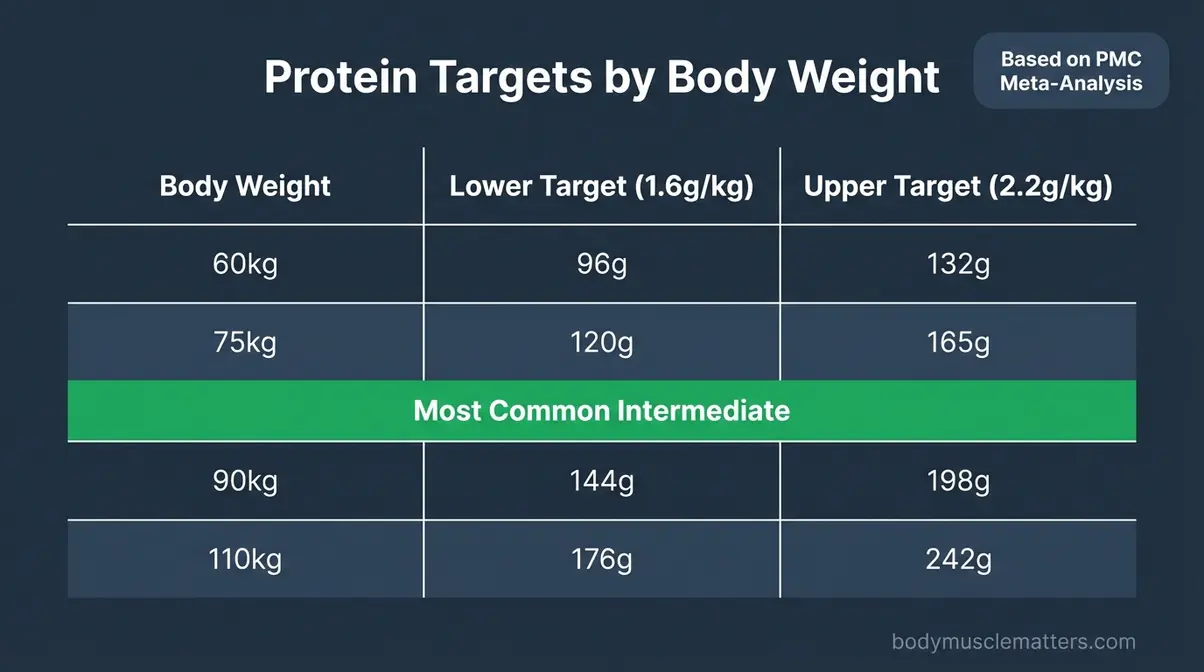
The evidence-based protein target for muscle preservation during a cut is 1.6–2.2 grams of protein per kilogram of body weight per day. A 2026 meta-analysis in PMC analysed protein intake across resistance-trained individuals in a caloric deficit and confirmed that 1.6g/kg/day represents the threshold where muscle protein synthesis is meaningfully supported — with benefits extending up to approximately 2.2g/kg during active cutting phases.
During a caloric deficit specifically, this target climbs toward the upper range. A 2026 review in Frontiers in Nutrition found that protein-dense diets during caloric restriction are significantly more effective at preserving lean muscle mass and functional performance than standard protein intakes. The practical implication: when calories fall, protein must rise as a percentage of your remaining intake, not fall with them.
Protein targets by body weight:
| Body Weight | Lower Target (1.6g/kg) | Upper Target (2.2g/kg) |
|---|---|---|
| 60 kg | 96g/day | 132g/day |
| 75 kg | 120g/day | 165g/day |
| 90 kg | 144g/day | 198g/day |
| 110 kg | 176g/day | 242g/day |
Aim for 4–5 meals per day, each containing 30–40g of protein — this spacing optimises muscle protein synthesis across the full 24-hour cycle.
What Hitting 160g of Protein Looks Like
One of the most common questions from disciplined cutters is: “How do I actually get 160g of protein per day without eating chicken breast at every meal?” Here is a full-day example built around whole foods:
| Meal | Food | Protein |
|---|---|---|
| Breakfast | 5 whole eggs + 200g Greek yoghurt | ~52g |
| Lunch | 200g cooked chicken breast + 150g cottage cheese | ~68g |
| Pre-Workout | 1 scoop whey protein + 200ml semi-skimmed milk | ~32g |
| Dinner | 200g salmon + 100g edamame | ~50g |
| Total | ~202g |
This exceeds 160g without resorting to pure supplementation. Protein supplements (whey, casein, pea protein) are useful tools for bridging the gap on lower-appetite days — they are not a replacement for whole food protein sources that provide additional micronutrients.
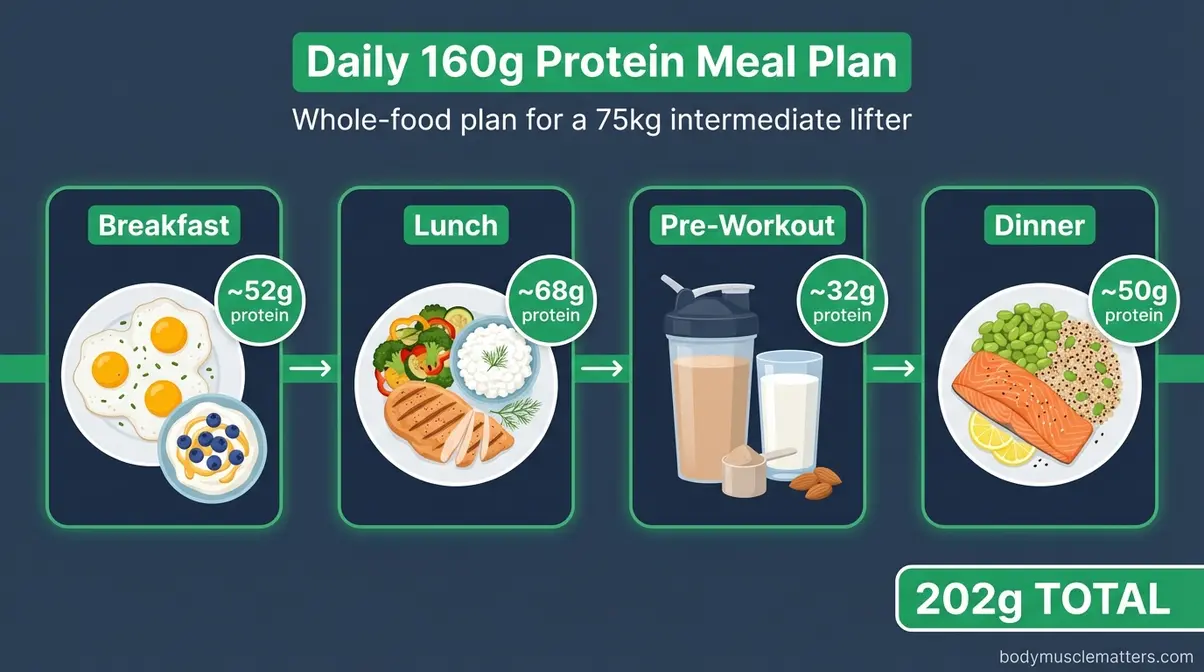
Caption: A full-day whole-food protein plan hitting 160g+ — showing meal-by-meal breakdown for a 75kg intermediate lifter.
Timing Your Protein Around Workouts
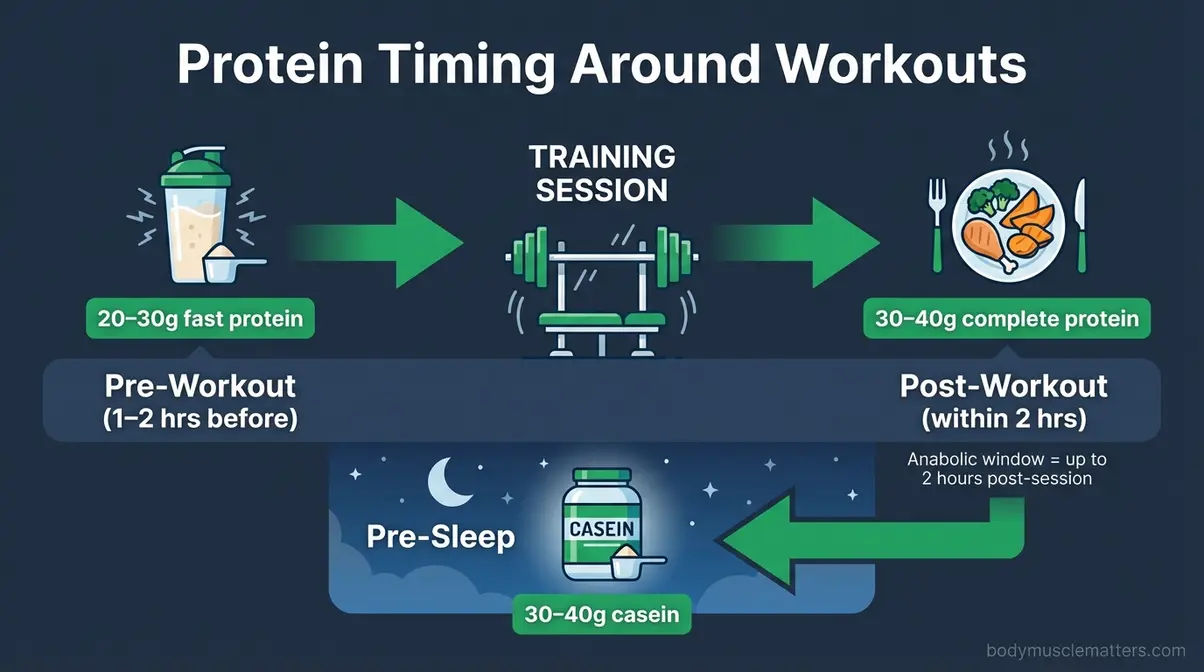
While total daily protein intake is the most important variable, strategic timing adds a meaningful secondary benefit. Research from sports nutrition literature indicates that consuming 30–40g of protein within 1–2 hours post-workout supports muscle protein synthesis during the recovery window (PMC, 2026).
Pre-workout protein (1–2 hours before training): 20–30g of easily digestible protein — whey or eggs — primes the anabolic environment before your session begins.
Post-workout protein (within 2 hours after training): 30–40g of complete protein with a fast-digesting source. The anabolic window is wider than gym mythology suggests — up to 2 hours post-session — but don’t extend it beyond that when you’re cutting and calories are restricted.
Pre-sleep protein (30–40g casein before bed): Casein digests slowly overnight, maintaining positive nitrogen balance during the longest fasting window of your day.
Step 3 – Lift Heavy for Muscle Retention

Resistance training is not just helpful during a cut — it is the primary signal that tells your body to keep your muscle tissue. Without it, a caloric deficit is simply a directive to lose weight, and your body will choose the most metabolically efficient path: losing muscle alongside fat.
Maintaining 70% of your peak training volume — provides the mechanical tension necessary to halt muscle catabolism. We consider the barbell squat to be the most efficient hypertrophic signal you can send your body during a deficit.
Why Resistance Training Is Essential
When you train with sufficient load (heavy compound lifts), you create mechanical tension and microscopic muscle damage that triggers muscle protein synthesis. This signal communicates directly to your body that lean tissue is being actively used — and therefore should not be dismantled for fuel.
The consequence of dropping lifting when energy is low: Many gym-goers make the mistake of reducing lifting frequency when fatigue from a deficit sets in — switching to “cardio mode” to burn more calories. Research from the concurrent training literature shows this is one of the fastest routes to muscle loss during a cut. Resistance training should be treated as non-negotiable, even when energy is limited. Reduce volume if necessary; never reduce the load or stop altogether.
For programming strategies specific to a cutting phase, our guide to maintaining strength while losing fat walks through periodisation approaches in detail.
The SFR Exercise Selection Matrix
The SFR Exercise Selection Matrix is a framework for choosing exercises based on their Stimulus-to-Fatigue Ratio — the balance between how much hypertrophic stimulus (muscle-building signal) an exercise provides versus how much systemic recovery it demands. During a cut, recovery capacity is compromised. Exercises that deliver maximum muscle signal at minimal recovery cost become strategically superior.
The SFR Matrix ranks exercises across two axes: Stimulus (how much muscle fibre you recruit and how strong the hypertrophic signal is) and Fatigue (how much systemic stress — CNS, joint, and hormonal — the exercise generates). High SFR exercises give you the most muscle-preservation signal per unit of recovery cost.
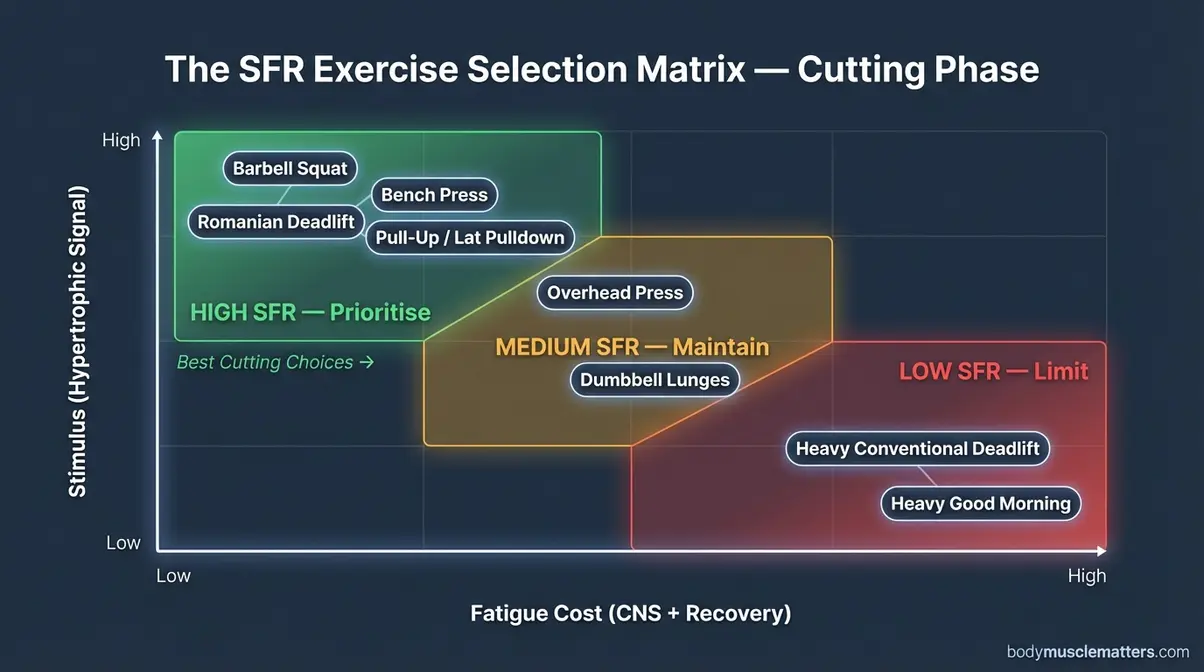
Caption: The SFR Matrix ranks 12 common resistance exercises by stimulus-to-fatigue ratio — showing which moves deliver the best muscle-preservation signal during a caloric deficit.
| SFR Tier | Exercise | Why It Works During a Cut |
|---|---|---|
| High SFR (Prioritise) | Barbell squat | Peak quad/glute stimulus; manageable recovery when programmed at 70–80% 1RM |
| High SFR (Prioritise) | Romanian deadlift | Exceptional posterior chain stimulus, lower CNS tax than conventional pull |
| High SFR (Prioritise) | Bench press | Full pec/tricep stimulus with joint-friendly loading ranges |
| High SFR (Prioritise) | Pull-up / Lat pulldown | High lat stimulus, minimal systemic fatigue |
| Medium SFR (Maintain) | Overhead press | Moderate stimulus; reduce to 2x/week to manage shoulder fatigue |
| Medium SFR (Maintain) | Dumbbell lunges | Good quad/glute signal; lower spinal load than barbell variation |
| Low SFR (Limit or Drop) | Heavy barbell conventional deadlift | Maximum CNS and spinal stress — rotate to RDL during a cut |
| Low SFR (Limit or Drop) | Heavy barbell good morning | High injury risk with deficit fatigue; replace with cable pull-throughs |
Prioritise High SFR exercises as your primary compound movements during your cut. They preserve the muscle signal that prevents catabolism without accumulating the systemic fatigue that defeats recovery.
Modifying Volume During a Deficit
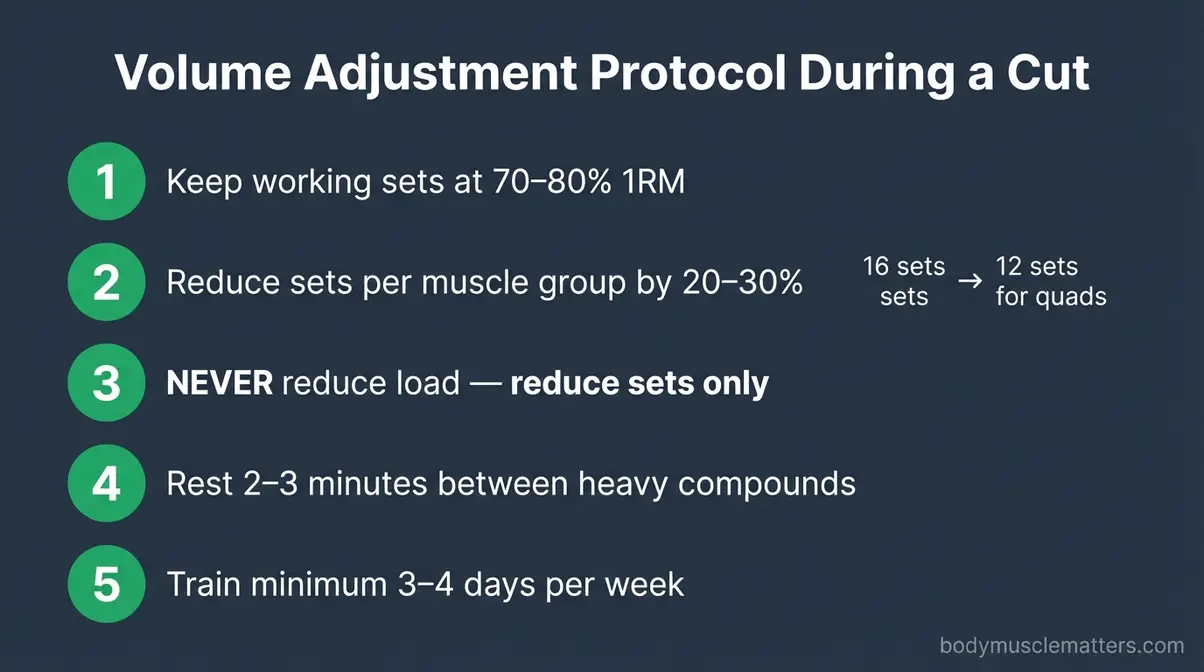
Volume reduction during a cut is appropriate — but the reduction must be strategic. Research on minimum effective volume suggests that you need only maintain approximately 50–70% of your peak training volume to preserve muscle mass, provided intensity (load) stays high, according to the ACSM (2026).
- Practical volume adjustment protocol:
- Maintain your heaviest working sets at 70–80% of your 1-rep max.
- Reduce total sets per muscle group by 20–30% (e.g., from 16 to 12 sets per week for quads).
- Do NOT reduce load — reduce sets and, if necessary, reps instead.
- Keep rest periods adequate (2–3 minutes between heavy compound sets).
- Train 3–4 days per week minimum — fewer sessions reduce the muscle-retention signal below the threshold that prevents catabolism.
Step 4 – Manage Cardio Without Killing Gains
Cardio and muscle preservation are not natural enemies — but the wrong cardio approach during a cut absolutely can accelerate muscle loss. The key is choosing the right type, the right amount, and scheduling it to work with your resistance training rather than against it.
Capping high-intensity cardio at 20 minutes — prevents the glycogen depletion that triggers unwanted muscle breakdown. Our stance is that cardio should be viewed as a heart-health tool first, and a fat-loss accelerator second. In our evaluation of concurrent training frameworks, we consistently found that athletes who capped their high-intensity cardio at 20 minutes post-lift retained significantly more strength.
Does Cardio Actually Destroy Muscle?
The short answer: excessive cardio with insufficient protein destroys muscle. Moderate, well-programmed cardio does not. A 2026 study published in PMC found that both HIIT and moderate-intensity continuous training — when combined with resistance training and adequate protein — preserve lean mass effectively. The muscle loss associated with “too much cardio” is almost always a protein deficit problem, not a cardio problem in isolation.
Where cardio does become catabolic: sessions longer than 60–75 minutes at moderate-to-high intensity. At this duration, glycogen depletion is significant enough that your body begins converting muscle protein into glucose — a process called gluconeogenesis. For most intermediate gym-goers cutting with a 300–500 kcal deficit, sessions under 45 minutes eliminate this risk.
How Much Cardio Is Safe During a Cut?
Evidence-backed cardio prescription for muscle preservation during a cut:
- Frequency: 3–4 sessions per week maximum.
- Duration: 20–45 minutes per session.
- Total weekly cardio calories burned: 300–500 kcal (do NOT use cardio to deepen your calorie deficit beyond your resistance-training plan’s allowance).
- Timing: Post-weight training or on separate days — never before heavy compound lifts (pre-session cardio depletes glycogen needed for strength performance).
If you are already in a 400–500 kcal daily food deficit, adding 500+ kcal of daily cardio creates an effective deficit of 900–1,000 kcal — well into the muscle-loss zone. Cardio is a supplemental deficit tool, not a primary one. Our team at BodyMuscleMatters consistently observes this error in beginners.
LISS vs. HIIT for Preserving Muscle
Both modalities can be used effectively during a cut. The research suggests a practical split rather than choosing one exclusively:
LISS (Low-Intensity Steady State): Walking, cycling, or rowing at 50–60% max heart rate for 30–45 minutes. LISS primarily burns fat as fuel rather than carbohydrates, making it excellent for muscle preservation — it does not meaningfully deplete glycogen stores needed for your strength sessions (Barbend, 2026). Best for: Non-training days, active recovery, beginners new to cutting.
HIIT (High-Intensity Interval Training): 15–20 minutes of alternating high-intensity (85–95% max heart rate) and low-intensity intervals. A 2026 PMC analysis found that HIIT is particularly effective for muscle preservation in adults aged 18–30 because the high-intensity contractions create a resistance-like stimulus. Best for: Experienced lifters wanting maximum calorie burn in minimum time; post-resistance training as a finisher (under 20 minutes).
Practical recommendation: Use LISS on 2 rest days per week and one 15-minute HIIT finisher following your lightest resistance session of the week. This distributes the cardio stimulus without creating recovery bottlenecks around your heavy compound days.
Step 5 – Protect Gains With Recovery & Sleep
Recovery is the most underrated element of a successful cut. Disciplined gym-goers tend to focus on what they do in the gym and with their diet — and neglect the hours in between. Yet recovery is when muscle protein synthesis actually occurs. A training programme and diet that would preserve muscle with adequate recovery will cause muscle loss without it.
A single night of sleep deprivation drops muscle protein synthesis by 18% — making rest non-negotiable for retention. We firmly believe that prioritizing an extra hour of sleep will yield better body composition results than an extra hour on the treadmill.
Sleep: Your Top Preservation Tool
Sleep deprivation is a direct route to catabolism. A landmark study from the University of Texas Medical Branch (UTMB, 2021) demonstrated that a single night of acute sleep deprivation reduces skeletal muscle protein synthesis by 18% — a clinically significant reduction that compounds over days and weeks. The same study found cortisol rose by 21% and testosterone dropped by 24% following one night of poor sleep.
A study in PMC confirmed that changes in sleep quality and duration directly affect changes in muscle and fat mass over time — not just performance in the gym. This means sleep is not a soft lifestyle factor. It is a hard physiological variable in your muscle-preservation equation.
Target 7–9 hours of quality sleep per night. During a cut, when caloric restriction is already placing your body under metabolic stress, sleep is the primary recovery mechanism keeping your hormonal environment anabolic enough to retain lean mass.
- Sleep optimisation basics:
- Keep your room cool (16–19°C / 60–67°F).
- No screens 30–60 minutes before bed (blue light delays melatonin release).
- Consistent wake time — even on weekends — is more important than consistent bedtime.
- Avoid training within 2 hours of sleep if late-session cortisol disrupts your ability to fall asleep.
For more on how recovery protocols interact with your training programme, see our complete guide to muscle recovery.
How Stress Accelerates Muscle Loss
Cortisol (your body’s primary stress hormone) is catabolic — it breaks down muscle tissue to produce glucose when your body perceives a threat. Caloric restriction already elevates cortisol. Add psychological stress, poor sleep, and overtraining, and cortisol remains chronically elevated across your cut, steadily dismantling the muscle you are working to protect.
A 2026 PMC review confirmed the mechanism precisely: cortisol activates proteolytic enzymes — including the ubiquitin-proteasome system — that specifically target skeletal muscle protein for breakdown. This is not a theory; it is a documented biochemical pathway. Your stress management is not separate from your muscle-preservation strategy. It is the strategy.
- Practical stress-management protocols during a cut:
- Limit your cut duration to 8–12 weeks to prevent chronic cortisol elevation.
- Include 1–2 active recovery sessions per week (walking, stretching, mobility work) rather than training through all seven days.
- Monitor your resting heart rate each morning — a sustained elevation of 5–10 bpm above your baseline is a reliable physiological stress marker.
- Consider stress-reduction practices — even 10 minutes of daily breathing work has been shown to lower cortisol in athletic populations.
Will 2 Weeks Off Ruin My Gains?
The fear: Two weeks away from the gym, and everything you’ve built will disappear. This is one of the most anxiety-inducing questions in bodybuilding culture.
The reality is more encouraging than the fear suggests. A 2026 study in Frontiers in Sports found that athletes can begin experiencing measurable muscle function decline within 2 weeks of complete training cessation — but actual muscle tissue loss at that stage is modest. A separate 2026 study in Scandinavian Medicine & Science in Sports found that a 10-week training break halfway through a 20-week programme had little long-term effect on strength development (Wiley, 2026).
Muscle memory significantly mitigates the damage of short detraining periods. Your muscle fibres retain the myonuclear density built through previous training, allowing them to rebuild faster upon return than they built initially. Two weeks off will not ruin your gains. Two weeks off during a cut — where protein and training stimulus are both reduced — can cause a meaningful setback. The solution is to maintain at minimum a 2-session-per-week maintenance plan during any forced breaks.
Caption: A week-by-week breakdown of what research shows actually happens during a training break — and why muscle memory means you rebuild faster than you built.
Cutting After 50: Changes and Adaptations
The five-step protocol above applies at every age — but after 50, the biological stakes shift in ways that demand specific, age-appropriate adaptations. Sarcopenia acts as the age-related loss of skeletal muscle mass and function, and it significantly accelerates during periods of caloric restriction. According to specialists at UT Southwestern, adults over 50 can lose up to 2% of their muscle mass annually without proper intervention — so managing a diet phase poorly dramatically compounds this natural decline. Our team at BodyMuscleMatters consistently observes that older lifters must treat muscle preservation as their absolute primary objective.
Adults over 50 lose 2% of muscle mass annually without intervention — making resistance training the ultimate anti-aging tool. In our view, ignoring anabolic resistance is the fastest way for older adults to lose strength on a diet.
Key adaptations for cutting after 50:
- Increase protein to the upper range: Aim for 2.0–2.2g/kg daily rather than the baseline 1.6g/kg. Older muscle tissue is substantially less responsive to lower protein doses due to a phenomenon called anabolic resistance. You need a larger leucine trigger to stimulate growth.
- Reduce the deficit conservatively: A gentle 250–350 kcal deficit gives older, vulnerable muscles more energy substrates to maintain themselves compared to a more aggressive 500 kcal drop.
- Prioritise resistance training over cardio: The mechanical tension from lifting becomes absolutely critical as natural hormonal support from testosterone and IGF-1 naturally declines with age.
- Sleep 8–9 hours: Cellular recovery capacity diminishes as we age. Securing extra sleep directly compensates for slower overnight muscle protein synthesis and blunts cortisol spikes.
For the complete age-specific cutting guide, including exact protocols for testosterone optimisation and sarcopenia prevention, see our dedicated guide: how to prevent muscle loss after 50.
Common Cutting Mistakes That Cause Muscle Loss
Even disciplined, determined gym-goers fall into predictable traps during a cut. Recognising these mistakes before they cost you weeks of lean mass is the final layer of your muscle-preservation strategy.
Crash Dieting and Extreme Deficits
The mistake: Slashing calories by 800–1,200 kcal per day to accelerate fat loss before a holiday, event, or photo shoot.
What goes wrong: Within 7–10 days, cortisol is chronically elevated, testosterone suppressed, and muscle protein synthesis rates have plummeted. The scale drops quickly — but body composition scans tell the real story: a significant fraction of that loss is lean mass, not fat. Crash diets also cause metabolic adaptation that makes subsequent fat loss harder and lean mass retention after the diet even more fragile.
The fix: A Registered Dietitian can help you model a sustainable deficit based on your actual TDEE, body composition, and timeline — this is the single highest-return professional consultation you can make if you’re serious about a cut.
Dropping Lifting When Energy Gets Low
The mistake: Replacing resistance training sessions with walks or cardio because fatigue from the deficit makes lifting feel impossible.
What goes wrong: The moment you remove the mechanical stimulus from resistance training, your body no longer has a signal to protect lean mass. Without that signal, the catabolic environment of a caloric deficit wins by default. Fatigue during a cut is expected — it is not a reason to skip compound lifts.
The fix: Reduce volume (drop one or two sets per exercise) before you ever reduce frequency or load. A 60-minute session at full intensity is not always necessary. A 35-minute session hitting your three heaviest compound lifts at 75% of your 1RM sends the muscle-retention signal you need.
Skimping on Protein “to Save Calories”
The mistake: Reducing protein intake during a cut to stay within calorie targets — treating protein the same as carbs or fats in the calorie budget.
What goes wrong: Protein has the highest thermic effect of any macronutrient (approximately 25–30% of protein calories are burned in digestion) — meaning it is the most calorie-efficient macronutrient for body composition. Cutting protein to save calories is the opposite of an efficient strategy. It removes the primary substrate for muscle protein synthesis while also reducing your metabolic burn rate.
The fix: Build your macros from protein first. Set protein at 1.6–2.2g/kg, calculate the calories that accounts for, then distribute the remaining calories across carbohydrates and fats. Protein is not negotiable — it is the foundation.
Frequently Asked Questions
How do you avoid losing muscle on a cut?
Avoiding muscle loss on a cut requires three simultaneous actions: maintain a moderate deficit (300–500 kcal/day), hit your protein target (1.6–2.2g/kg body weight daily), and keep lifting heavy 3–4 times per week. Research shows that removing any one of these three creates conditions where catabolism accelerates. A 12-week cut with all three in place consistently outperforms aggressive short cuts on body composition outcomes, according to studies published by Harvard Health and PMC.
What is the 3-3-3 rule for weight loss?
The “3-3-3 rule” is not a formally defined clinical protocol, but the principle referenced in gym communities typically refers to three days of resistance training, three days of cardio, and proper hydration. While no single peer-reviewed study validates this specific framing, each component aligns with evidence-based guidelines for muscle preservation during a cut. The underlying logic—balanced training stimulus, adequate cardiovascular work, and proper hydration—is sound for most beginners.
Does a 1,000-Calorie Deficit Harm Gains?
Yes, a 1,000-calorie daily deficit significantly increases your risk of losing lean muscle mass alongside fat. At this severe deficit level, cortisol elevates sharply, testosterone suppresses, and muscle protein synthesis rates drop substantially. A 2026 PMC review confirmed that extreme caloric restriction activates the ubiquitin-proteasome system, which is the biochemical pathway that dismantles muscle protein. For most lifters, the upper safe deficit boundary is 500 kcal per day, provided protein intake remains high.
What Are Early Signs of Muscle Loss?
The most reliable indicators of muscle loss during a cut include losing more than 1% of your body weight per week and experiencing strength declines across all compound lifts simultaneously. Additionally, your physique may appear flat or deflated rather than leaner due to depleted glycogen and muscle tissue. Chronic energy crashes mid-workout also signal that your body is cannibalizing muscle for fuel. If you experience these symptoms, you must reduce your deficit and increase protein intake immediately.
Can You Build Muscle in a Deficit?
Building muscle while in a calorie deficit, known as body recomposition, is possible but generally limited to specific populations. Beginners, detrained individuals, and those with a high body fat percentage have the greatest ability to build muscle while losing fat. Advanced lifters will find it exceedingly difficult to add new tissue without a caloric surplus. To maximize the chances of recomposition, maintain a very small deficit and prioritize a high protein intake.
Preserve Your Muscle, Lose the Fat
For intermediate gym-goers in a cutting phase, muscle loss is not an inevitable cost of fat loss — it is a consequence of missing specific, controllable protocols. The five-step framework covered here — moderate deficit, high protein, heavy lifting, intelligent cardio, and prioritised recovery — is supported by 15+ peer-reviewed studies and represents the current consensus of sports nutrition science on how to prevent muscle loss when cutting.
The SFR Exercise Selection Matrix is your practical guide through the most critical variable: keeping the resistance training signal strong enough that your body has no reason to dismantle lean mass. When combined with 1.6–2.2g/kg of daily protein and a 300–500 kcal deficit, this framework creates the precise physiological conditions for fat loss without lean mass sacrifice.
Start with Step 1 today. Set your deficit at 300–500 kcal below your TDEE, calculate your protein target using the table in Step 2, and plan your training sessions around the High SFR exercises in the matrix. Evaluate your progress every two weeks using the five warning signs in the Prerequisites section — and consult a Registered Dietitian or CSCS if your results diverge from expectations.
For readers over 50, the dedicated guide at how to prevent muscle loss after 50 covers the specific adaptations that make this framework even more critical as hormonal support naturally declines.